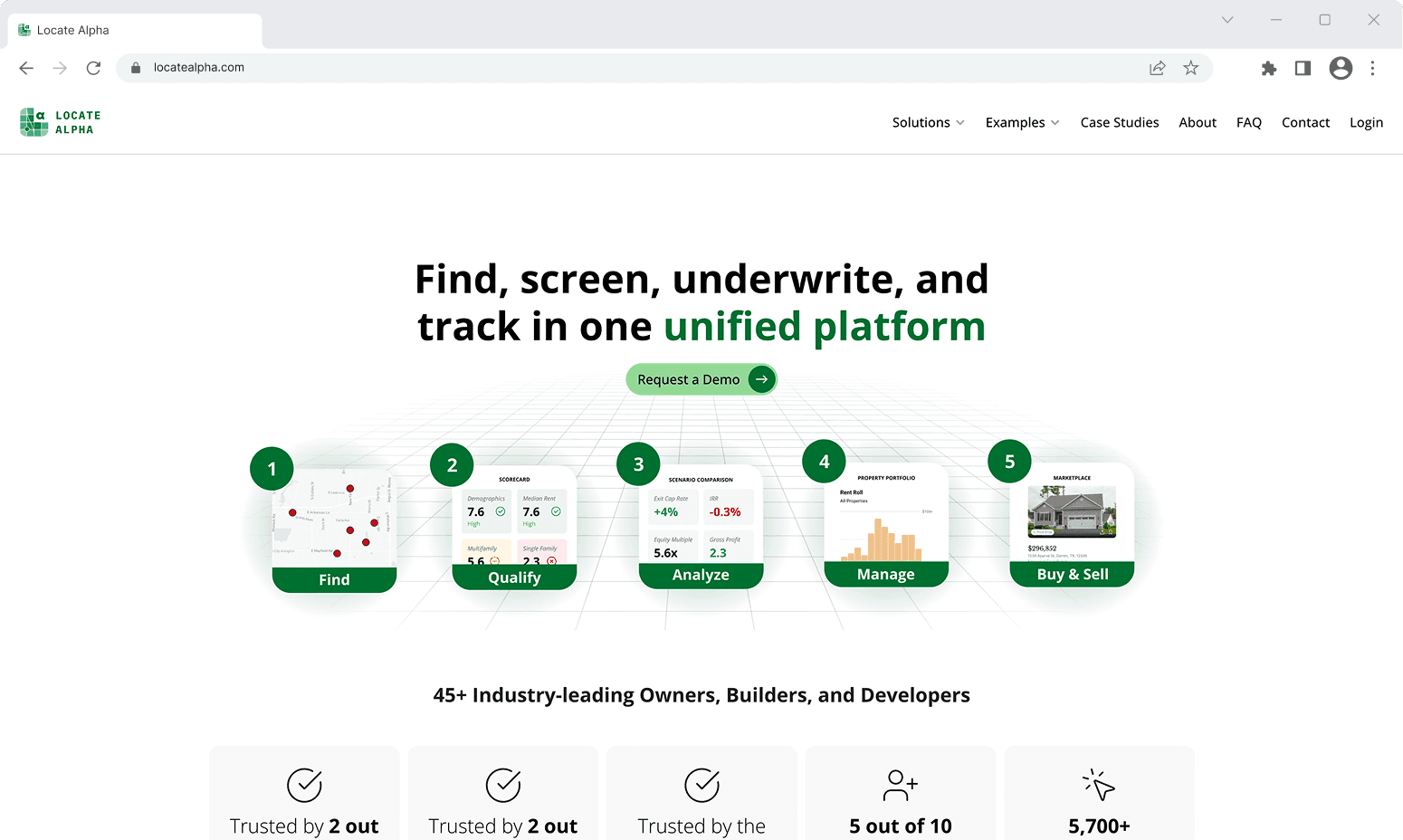
Generating leads and pulling in over a thousand visitors each month
DELIVERABLES
Framer website
Figma design
Marketing materials
ROLE
UI/UX design
Branding
Marketing
Graphic design
TEAM
Designer (me)
Design Mentor
CEO
TIMELINE
4 months
OVERVIEW
Turning a Forgotten Website into a Growth Engine
I was tasked with transforming a 5-year old incomplete site to a sleek catalyst for growth.
The Challenge: A growing real-estate software analytics company needed to rebrand their outdated website that was confusing potential clients, discouraging investors, and misrepresenting their evolved business model.
The Impact: Attracts 1k+ visitors each month, eliminated client confusion, increased professional credibility, and established a cohesive brand system used across all marketing materials.
RESEARCH
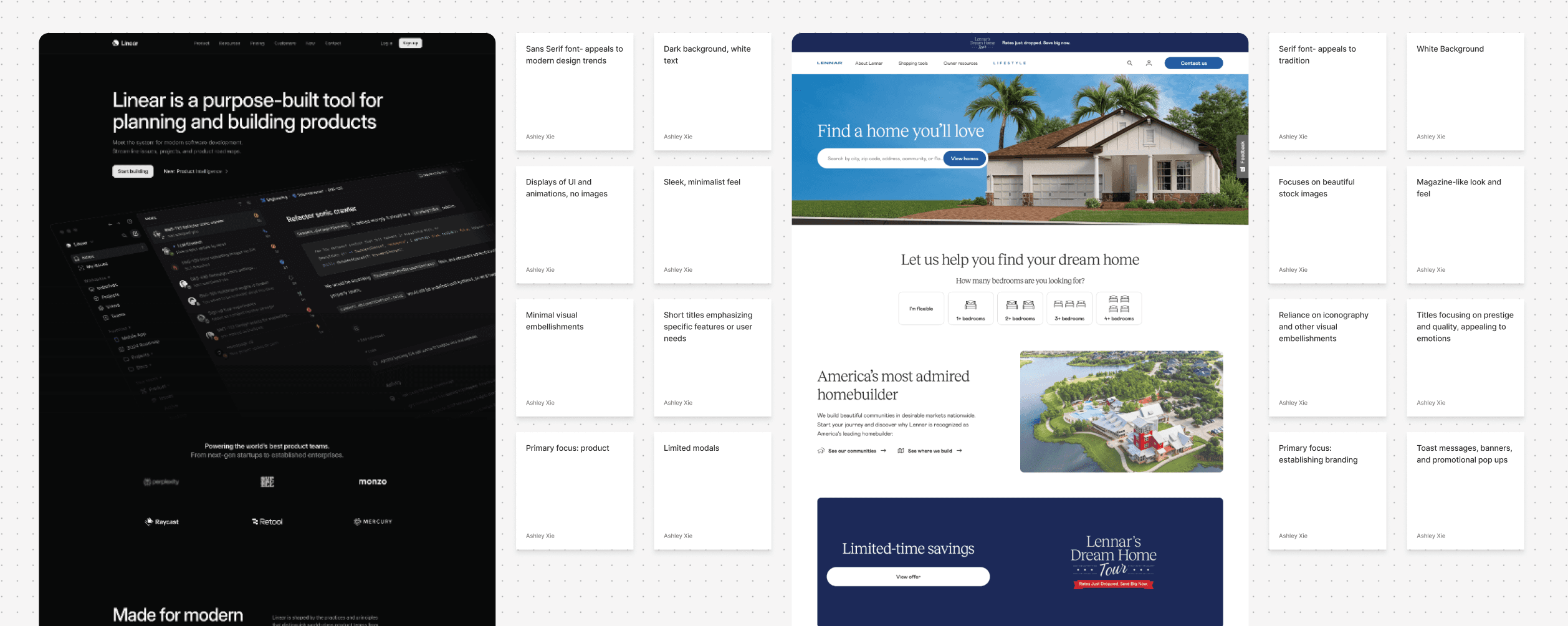
Analyzing Websites from Successful Companies
I analyzed 63 successful real estate companies and software startups, discovering a design tension:
PAIN POINTS
Identifying User Frictions that Cost Opportunities
Working within corporate constraints, I collaborated with our sales team to identify common user frustrations:
Unclear messaging
Contradictory wording led to lost deals
Missing CTA
Visitors were not encouraged to contact sales
Ugly interface
Investors were "embarrassed" of the site
Leaked info
Competitors posed as prospects to copy info
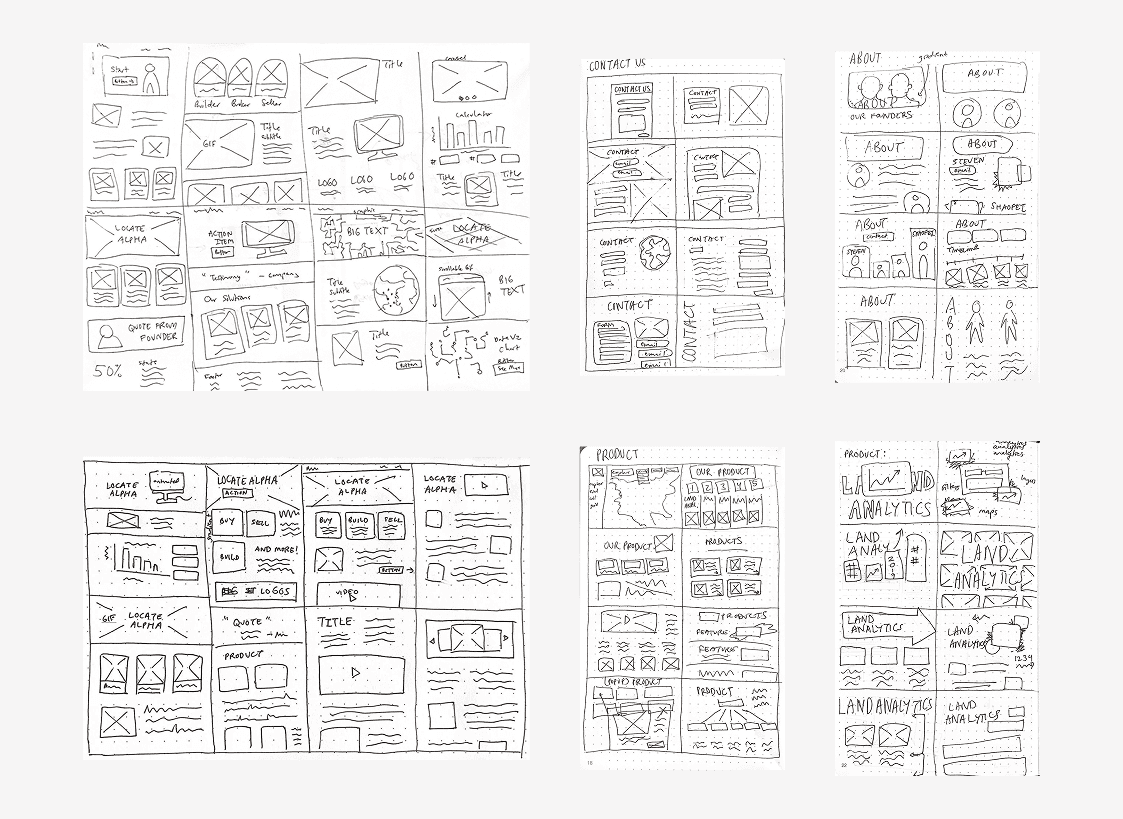
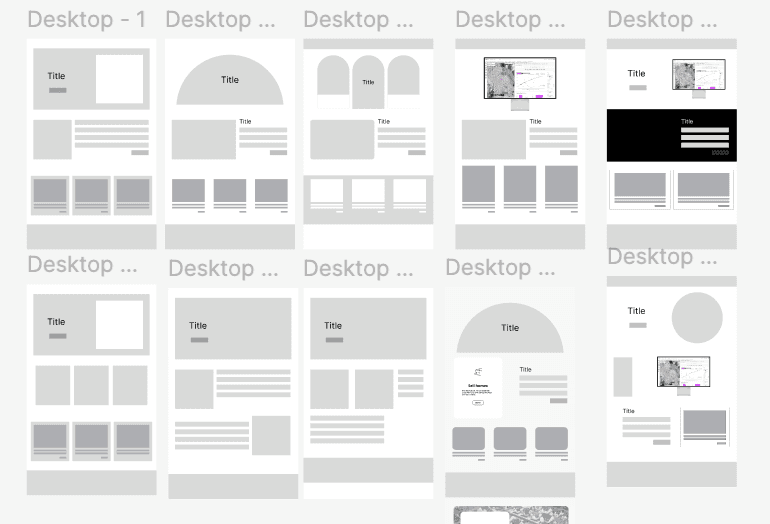
GRAYSCALES AND WIREFRAMES
Generating Unique Layouts
Successful landing pages all had intuitive layouts that balanced user expectations with unique graphics. I made sure to account for space for these branding assets when mapping out layouts for each page. However, I made sure to avoid common layouts used with AI-generated sites, as this gave sites a cheap look.
ITERATION ONE
Compiling Information in a Sleeker Design
This design helped the team settle down on what kind of information to prioritize.

Clear CTA
Multiple buttons lead to the contact page
Cleaner Interface
Colors & fonts provided visual hierarchy
Unclear Messaging
Flashy catchphrases didn't explain offerings
Leaked Info
Full screenshots leak company UI
ITERATION 3
Optimizing for user skimmability
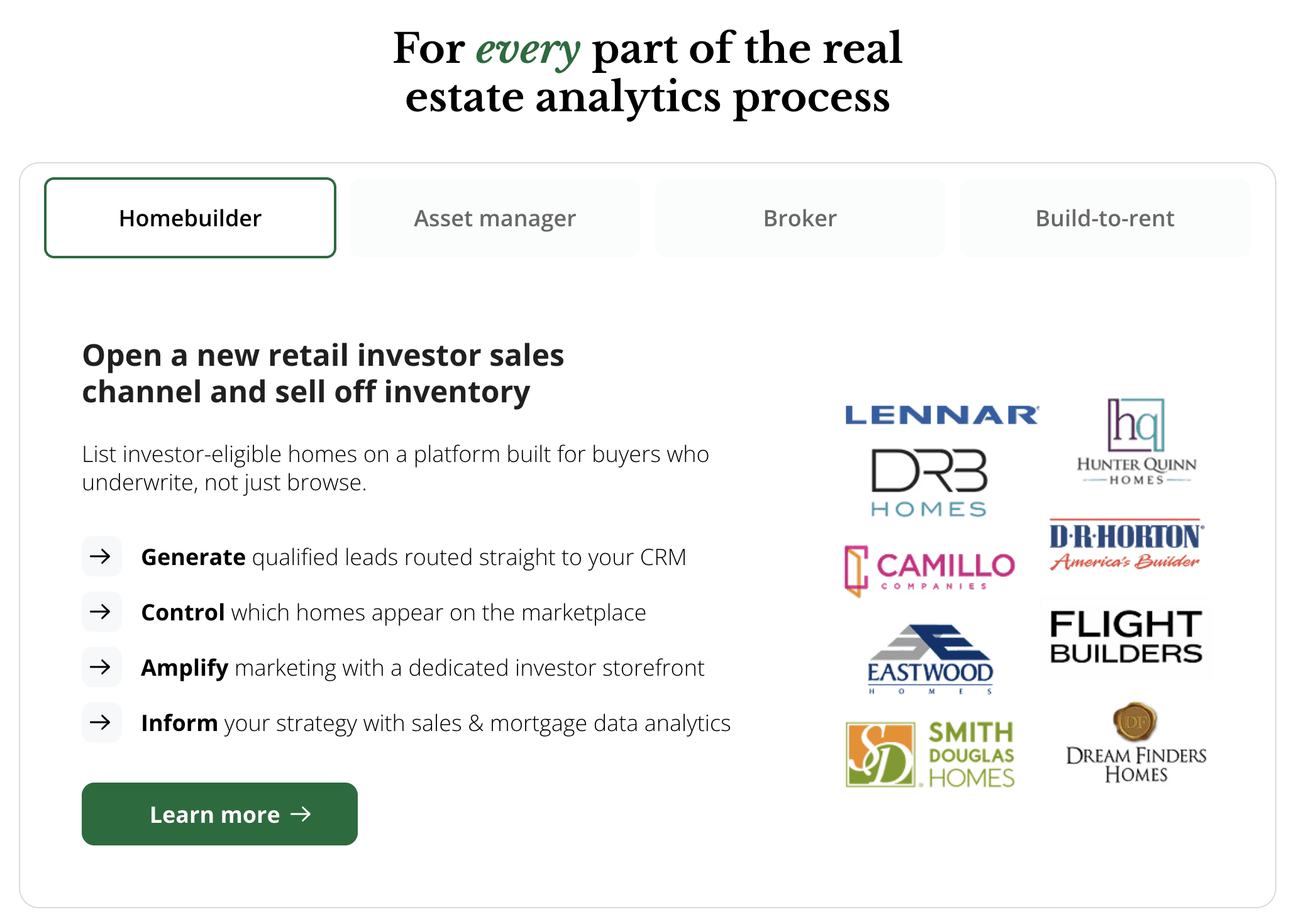
I readjusted the layout to be easier to scan and added an FAQ page, more product pages, and solution pages. This time, I focused on revamping the content to be user-specific, even if one product appealed to multiple users.

Immediate funnel for users
Visitors can identify with clear user groups and jump to pages with information specific to their goals
Credible, not AI-generic language
Real-estate-specific terminology shows that we know what we are talking about
RESULTS
Solving Complaints and Attracting New Clients
unique visitors/month
qualified leads generated
reduction in UI-related complaints
QUANTITATIVE OUTCOMES
Zero complaints about website confusion (previously a regular issue)
11 qualified leads generated through contact form in first month post-launch
363 unique visitors in first month post-launch
100% reduction in irrelevant laser inquiries
QUALITATIVE FEEDBACK
Investor specifically complimented the professional design
Sales team proudly incorporates website link into prospective client emails
Users even began using the website as a login shortcut to company software
Design system successfully applied across all materials
REFLECTION
Adapting Design Research to Corporate Reality
While creating my third iteration of the website, I examined Hotjar recordings and Framer analytics to realize that the beautiful graphics of our website were not helpful in answering the question new visitors had, which was simply "Is this a legitimate product?" I removed pretty linework to adopt a simpler style that was easier for users to skim, especially since many users only spent less than a minute scrolling the home page.
Unlike my courses in college, there was limited access to direct user feedback in this fast-paced startup environment. Instead of using the traditional user interviews methodology taught in class, I gathered stakeholder insights and implemented post-launch analytics. In the end, sometimes "no complaints" is the best success metric when transitioning from an underdeveloped baseline.
I wanted to prove my prowess by creating as many polished, high-fidelity designs as possible to provide a range of options for the company to choose from. However, my perfectionism here bogged down the process. Six roughly designed options easily triumphs three pixel-perfect ones. Often, the final result was a mish-mash of multiple designs. In the future, I will prioritize rapid iteration and collaborative refinement over individual perfection.
Despite available AI tools, authentic, clear copywriting remained the most critical factor for user comprehension and trust. I spent too much time and effort on the aesthetics of the platform. In reality, focused content strategy delivered more value than purely aesthetic improvements.
While the company needed more consistent branding, creating a new design style risked exacerbating the problem by creating more variety. To avoid this, I not only renovated older materials, but I also made these assets easier for other employees to use. I executed this goal through multiple email and Powerpoint templates for easy distribution and use, as well as one-pagers and webpages for every single use case/product. Making branding consistent for other employees was now as easy as attaching a file or pasting a link.
WHAT'S NEXT
Continuing to adapt to our target users
This project established a foundation for the company's continued growth and professional positioning. The design system I created continues to guide marketing efforts, and the analytics implementation provides ongoing insights for future optimizations.
A/B testing key conversion elements
User journey mapping for enterprise sales processes
Advanced personalization for different user segments
This project taught me the importance of balancing user needs, business constraints, and stakeholder feedback in a real-world corporate environment. It reinforced that great design isn't just about beautiful interfaces, but also about solving actual business problems through thoughtful design decisions.